Why construction dust comes back three days after you clean
Published: July 14, 2026
You washed the flat, and two days later the windowsill is white again. Here is where the dust hides and how to stop it coming back.

Construction dust behaves nothing like household dust. Cement, plaster and filler particles are dozens of times finer and weigh almost nothing: after cleaning they hang in the air for hours and settle on surfaces you have just washed. That is why the job feels like it "does not hold".
Where it hides
The usual mistake is cleaning only what you can see. Dust packs itself into places nobody looks into, and slowly returns to the room from there.
- Tops of cabinets, cornices, door frames and architraves
- Radiator fins and the gap behind them
- Ventilation grilles and air conditioner filters
- The recess under the bath and behind the toilet
- The inside of cupboards and drawers, even closed ones
The order of work
Sequence matters: start with the floor and you will be washing it twice. Work top to bottom, from the far room towards the door.
- Dry collection first: an industrial vacuum with a filter, never a broom — a broom throws the dust back into the air
- Ceiling and walls, then furniture, floor last
- Windows after the walls: the frame and the hardware hold the most dust
- A second pass a few hours later, once airborne dust has settled
- A third pass the next day — this is the one that actually settles the matter
Another common mistake is scrubbing dried paint and grout straight away. Soften them with a suitable product first, otherwise you take the top layer of the tile or laminate off along with the stain. Matt porcelain is especially easy to ruin: the scratches show up in raking light.
After a full renovation, expect two or three visits over a week. One clean will not defeat the dust after that much work — and that is normal, not a sign of a bad team.
Post-construction cleaning
Construction dust removed from every surface, including the ones you cannot see.
Learn moreAll articles
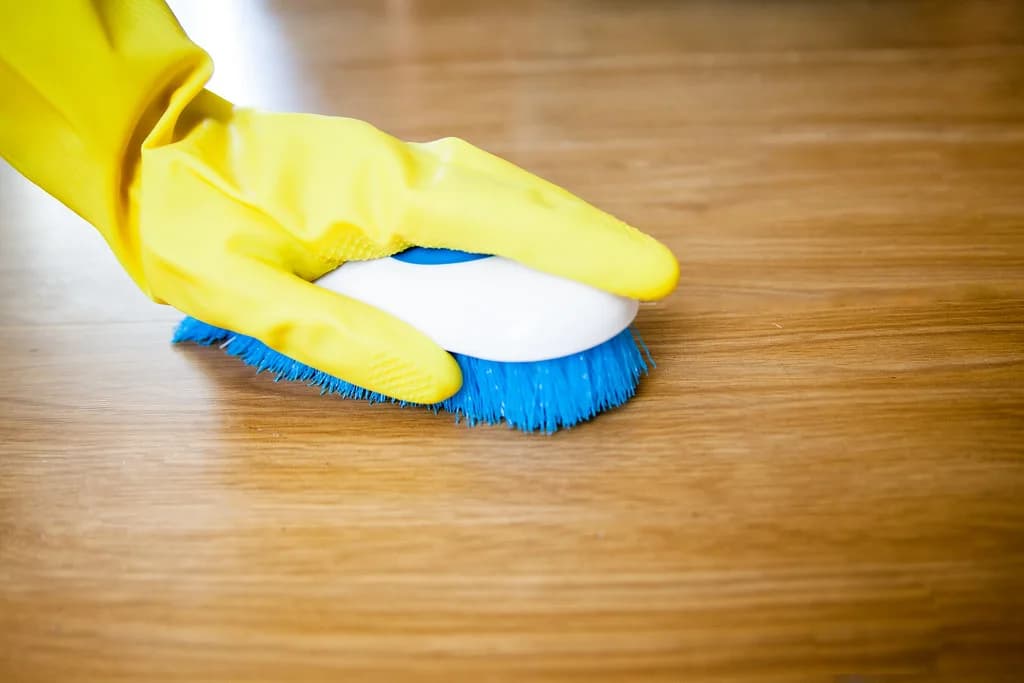
What you must never mix when cleaning: four dangerous pairs
Bleach and a limescale remover in the same bathroom produce chlorine gas. Here are the combinations that send people to hospital, and how to read the label.
Read
Deep clean or regular clean: how to tell which one you need
The difference is not how hard the team tries, it is the scope of work. Simple rule: if in doubt, count the months since anyone cleaned behind the fridge.
Read